
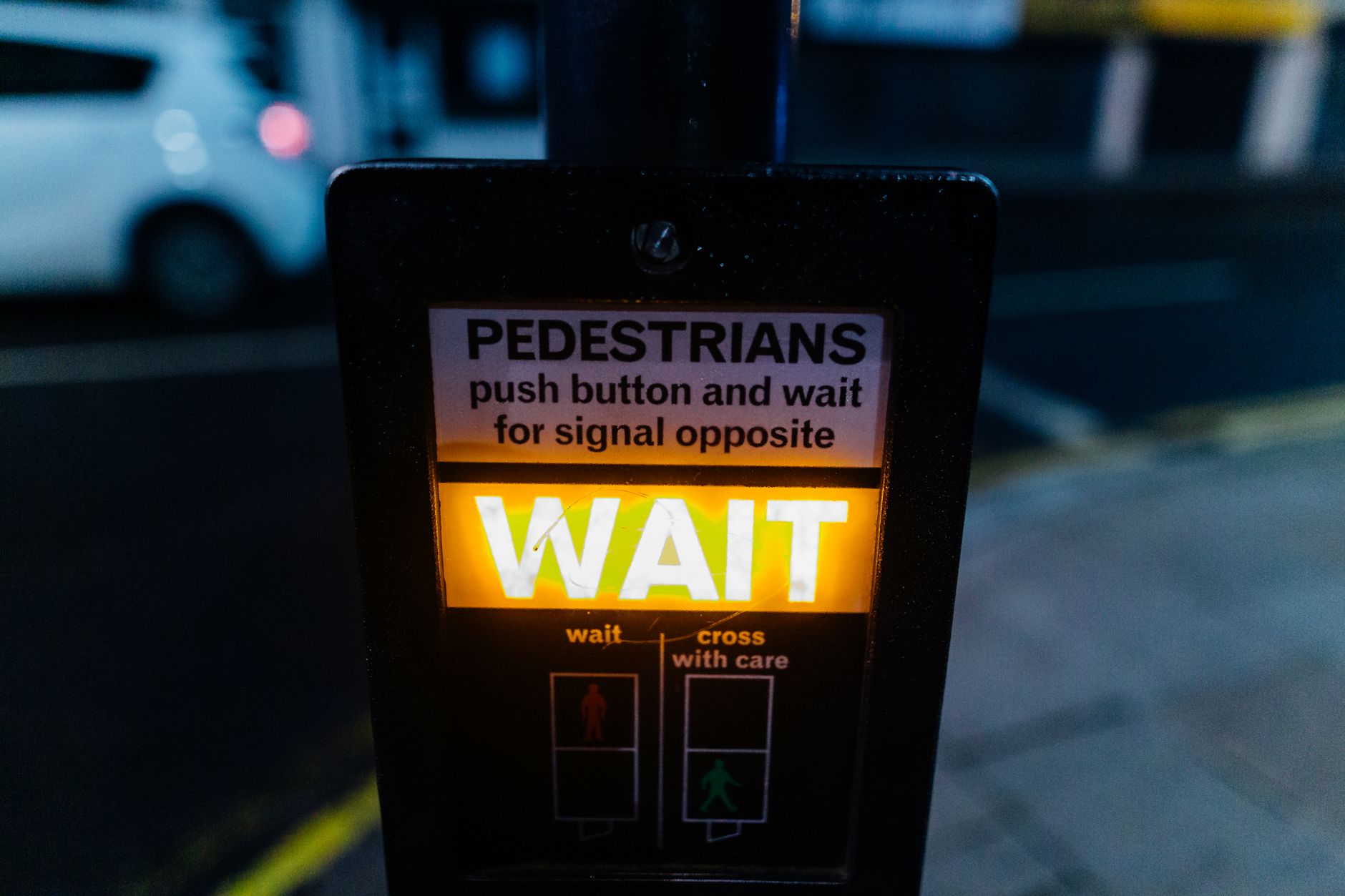
Pedestrian counting technology has been a fixture in retail for years. What's changed is its role at street level. Australian transport authorities and city planners are now deploying pedestrian sensing as an active layer of urban infrastructure, using it to inform signal timing, justify capital spending, and feed data into broader IoT networks. Understanding how the technology works, and where it fits within a signal system, matters for anyone specifying or procuring smart city components.
Why pedestrian volume data is operationally useful
Traffic signal engineering has traditionally focused on vehicle throughput. Pedestrian demand was measured indirectly: push-button actuations, manual counts, or assumed from land-use models. None of those methods capture the continuous, granular picture that modern intersection management requires.
Real pedestrian volume data changes several things. Signal timing teams can calibrate minimum green times for crossing phases against actual demand rather than conservative estimates. Network operators can identify crossings where push-button compliance is low, which often signals poor placement or a high proportion of mobility-impaired users. And planners gain evidence-grade data for infrastructure investment decisions, removing the guesswork from prioritisation.
Bob Panich Traffic Signals integrates pedestrian sensing within signalised intersection designs where transport authority briefs call for demand-responsive crossing control. The data pipeline from sensor to controller is as important as the sensor hardware itself.
Sensing technologies in use at street level
Four main sensing approaches appear in Australian deployments, each with distinct trade-offs around cost, accuracy, and privacy compliance.
Infrared (passive IR) beam counters are the most established method. Two opposing units project a beam across a path; interruptions count crossings. They're low cost and highly reliable in dry conditions, but struggle with bi-directional flows and perform poorly in heavy rain. Most legacy pedestrian counting installations in council footpaths use this approach.
Thermal imaging sensors detect heat signatures rather than visible light, producing a top-down or angled view of foot traffic without capturing identifiable imagery. They work in darkness, handle bi-directional flows, and are largely unaffected by glare. Privacy regulators in New South Wales and Victoria have indicated a preference for thermal over optical in public space deployments, and uptake has grown accordingly.
Time-of-flight (ToF) depth sensors emit structured light pulses and measure return time to generate a 3D depth map of the scene. They distinguish individuals in crowds with reasonable accuracy at moderate throughput volumes, and the output is depth data rather than photographic imagery, which simplifies privacy compliance. Several smart intersection pilots in Australia have paired ToF sensors with signal controllers to enable real-time demand detection.
Video analytics with edge processing uses optical cameras paired with on-device AI inference. The camera never transmits raw video to a central server. Instead, the edge processor counts persons, classifies movement direction, and outputs anonymised metadata. This approach delivers the highest accuracy at high-density crossings but carries the greatest regulatory overhead to justify data governance.
The choice between these isn't purely technical. It depends on the procurement framework, the privacy obligations of the operating authority, and the downstream systems the data needs to feed into. Bob Panich Traffic Signals specifies sensing hardware in the context of the full signal and data architecture, not as a standalone product decision.
How pedestrian counts connect to signal control
A sensor that counts pedestrians but doesn't inform the signal controller is a monitoring tool, not an infrastructure component. The integration layer is where the operational value sits.
In a demand-responsive crossing, the controller uses pedestrian detection to decide when to call a pedestrian phase. A sensor detecting persistent waiting demand can advance the call ahead of the push-button input, reducing wait times at high-volume crossings. At low-demand crossings, the absence of detected pedestrians can suppress a pedestrian phase call, restoring green time to vehicles and improving network flow.
This connects directly to the wider logic of queue detection at signalised intersections, where real-time demand data from multiple sources, vehicle queues, pedestrian volumes, and phase request history, feeds a controller making continuous timing decisions. Pedestrian count data is one input in that decision set.
Sensor outputs typically communicate via SDLC (Serial Data Link Control) or TCP/IP interfaces to a modern signal controller. The integration specification matters: not all controllers accept continuous sensor streams natively, and some require middleware to translate count data into phase demand inputs. Bob Panich Traffic Signals manages this integration at the controller architecture level, ensuring sensor data reaches the correct input register without latency that would undermine real-time response.
Data quality and failure modes
Pedestrian sensing fails in predictable ways, and good system design accounts for all of them.
Occlusion is the most common accuracy problem: when pedestrians group closely together, overlapping signatures cause undercounting. Thermal and ToF sensors handle this better than beam counters, but no technology fully resolves it in peak crowd conditions. Count data from high-density crossings should carry an uncertainty margin when used for planning purposes.
Environmental interference varies by sensor type. IR beams are disrupted by rain and fog. Thermal sensors struggle when ambient temperature approaches body temperature, which is relevant in northern Australia during summer. Optical cameras lose accuracy in low light without supplementary illumination.
Calibration drift is less discussed but practically significant. A sensor installed and never recalibrated will produce accurate data initially and drift over months. Site conditions change: adjacent construction, changed vegetation, or a new shelter can alter the sensor's field of view. Maintenance schedules should include periodic calibration checks, not just physical inspections.
Cabinet-level considerations also apply. Sensors mounted on signal poles or in kerb housings share the physical environment with signal hardware, and the thermal and humidity conditions inside enclosures affect long-term reliability. The temperature and humidity effects on industrial storage in traffic cabinets apply equally to embedded sensing hardware: sustained thermal cycling accelerates component wear.
Privacy compliance in public space deployments
Australian privacy regulation doesn't prohibit pedestrian sensing in public spaces, but it does impose requirements on how data is collected, retained, and disclosed. The Privacy Act 1988 and the Australian Privacy Principles (APPs) apply where the collecting organisation meets the threshold for coverage, which includes state government transport authorities and most local councils.
The practical requirements for compliant pedestrian counting deployments come down to three things. First, only count-level or aggregate data should leave the sensor or edge device. Raw imagery, depth maps that could reconstruct identifiable gait patterns, and location-tagged individual trajectories are each more legally exposed than a simple headcount. Second, retention periods should match operational need. Fifteen-minute interval counts for signal timing optimisation don't need to be stored for three years. Third, the data governance framework should be specified and documented before procurement, not retrofitted after installation.
Bob Panich Traffic Signals works within privacy specifications set by the operating authority and advises on sensor technology selection where privacy compliance is a project constraint. Choosing the right sensor type early avoids costly remediation when a deployment is audited.
Where pedestrian counting feeds into city-scale platforms
Individual intersection data becomes more valuable when it aggregates across a network. Cities that operate a city-wide IoT sensor network for live traffic data can correlate pedestrian volumes with vehicle throughput, public transport usage, and environmental conditions, giving operators a fuller picture of how a precinct functions across a day or week.
That kind of data underpins demand-responsive transit frequency, active transport infrastructure planning, and evidence-based advocacy for pedestrian safety upgrades. A single sensor at a single crossing produces operational data. A network of sensors across a CBD produces planning intelligence.
Bob Panich Traffic Signals designs pedestrian sensing deployments with data architecture in mind from the outset, specifying communication protocols, data formats, and integration points that make intersection-level data usable at network scale. The sensor is the least complex part of that problem. Getting the data where it needs to go, reliably and consistently, is the engineering challenge.