
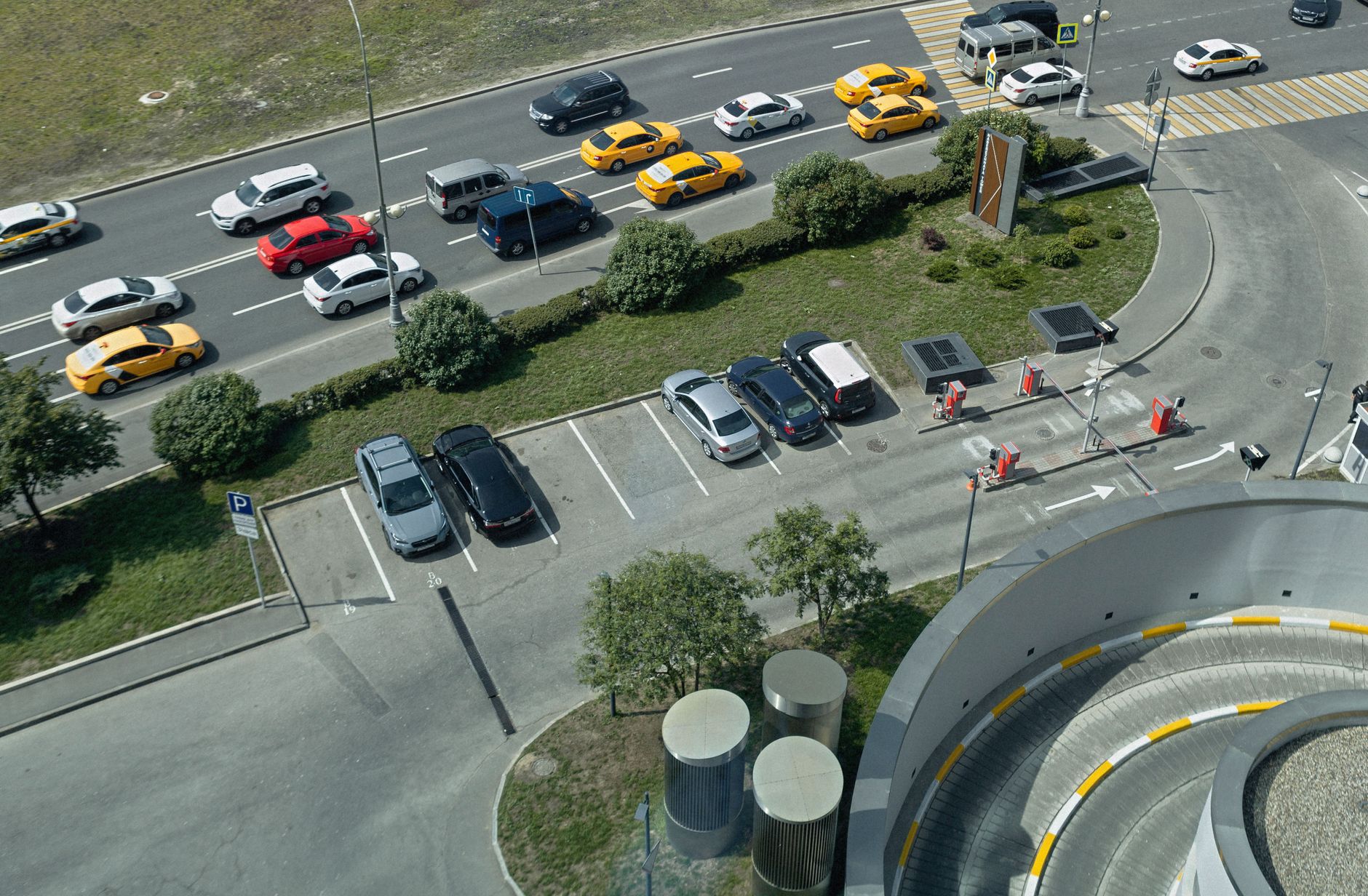
Queue detection at signalised intersections measures how far a line of waiting vehicles extends behind a stop line. It's a distinct function from loop-based vehicle counting or speed sensing: the goal isn't to count arrivals, it's to know whether a queue has grown long enough to block adjacent lanes, restrict turning movements, or push traffic back into an upstream intersection. When that information reaches a signal controller in real time, it can directly influence phase extension, cycle shortening, or priority override decisions.
What queue detection actually measures
A queue detector is typically placed well upstream of the stop line, at a distance chosen to represent a meaningful threshold. In Australian practice, that distance is often set at the point where a queue would begin to block a side street, a driveway, or a preceding intersection. The detector fires when a vehicle is stationary at that location for longer than a defined dwell threshold, usually 3 to 6 seconds. A moving vehicle passing the detector doesn't trigger the same response. The discrimination between moving and stationary vehicles is what separates queue detection from standard passage detection.
Inductive loops remain the most common hardware used for this purpose on existing infrastructure. They're embedded in the road surface at the threshold distance and connected back to the signal controller via cable. Video analytics systems now perform the same function without breaking the pavement: camera-based queue measurement can track the tail of a queue dynamically across a frame rather than at a fixed point. Radar-based detectors offer a third option, particularly where lane widths vary or where pavement works would make loop installation impractical.
How the controller uses queue data
A signal controller receiving a queue detection input can respond in several ways, depending on how the logic has been configured.
- Phase extension: the green phase on the queued approach is held longer to drain vehicles already waiting.
- Early cut-off on a conflicting phase: the opposing approach is shortened to release the queued direction sooner.
- Coordination override: in linked signal networks, a queue detection trigger can break the coordinated offset to prioritise local clearance over bandwidth progression.
The last of these is where queue detection most visibly affects network performance. Fixed-time coordination plans are designed around average demand. A queue that persists across multiple cycles means demand has exceeded that average, and holding to a fixed offset will make conditions worse, not better. Allowing the controller to step out of coordination temporarily, drain the queue, and re-sync is a more useful response than enforcing a plan that no longer fits the conditions.
This is closely related to how adaptive signal control responds to live traffic conditions: queue detection feeds the same real-time picture that adaptive systems use to re-plan cycle lengths and phase splits on the fly.
Placement and calibration considerations
The detector threshold distance isn't arbitrary. Setting it too close to the stop line means the controller only learns about a queue when it's already severe. Setting it too far back means minor, self-resolving queues trigger unnecessary phase changes that disrupt progression on other approaches.
Transport authorities in New South Wales and Victoria typically specify threshold distances between 50 and 150 metres, depending on intersection geometry, posted speed, and the downstream sensitivity of adjacent intersections. Where a freeway on-ramp or a rail crossing sits within 200 metres, the threshold is often set at the minimum distance needed to prevent queue lock-up at that constraint point.
Calibration also covers the dwell time parameter. A threshold set too low produces false positives when vehicles decelerate for another reason. Too high, and a genuine stationary queue is misidentified as slow-moving traffic. Most controllers allow the dwell threshold to be set independently per detector, which matters on approaches with mixed heavy vehicle and passenger vehicle demand.
Integration with vehicle detection and smart intersection design
Queue detection doesn't operate in isolation. It sits alongside presence detection at the stop line, advance detection further upstream, and in newer installations, detection layers from vehicle detection technology in smart traffic systems including radar arrays and AI-assisted video processing. The signal controller receives all of these inputs and applies priority logic to decide which condition drives the next phase decision.
At intersections designed to handle high pedestrian volumes, queue detection on vehicle approaches also interacts with pedestrian call demands. A long vehicle queue combined with a pedestrian crossing request creates a conflict the controller must resolve: extending the vehicle green to drain the queue, or serving the pedestrian phase and accepting further queue growth. How that conflict is resolved depends on the intersection's phase priority configuration, which is set during commissioning and reviewed when traffic patterns change.
At the network level, queue detection data feeds into centralised traffic management platforms. Smart intersection design treats queue length as one of the key performance indicators alongside delay, throughput, and stop rate. Persistent queue detection triggers across multiple intersections on a corridor are a signal that demand has outgrown the current timing plan, prompting a review of cycle lengths or the addition of a dedicated turning phase.
What can go wrong
Loop-based queue detectors fail for the same reasons any buried inductive loop fails: pavement cracking from heavy vehicles, water ingress into conduit joints, and cable termination faults in the signal cabinet. A failed queue detector typically registers as a constant call (stuck-on) or no call, and the controller's response to each is different. Stuck-on triggers phase extension logic continuously, degrading throughput on the conflicting approaches. No call means the queue builds silently, with no adaptive response.
Maintenance teams monitoring signal cabinet diagnostic logs can identify detector faults before they become operational problems. Data logging in traffic signal cabinets captures detector status continuously, which makes fault diagnosis faster and supports the audit trail required for compliance reviews under Australian state transport authority standards.
Video-based queue detection avoids the loop failure modes but introduces its own: lighting changes at dawn and dusk, shadows from adjacent structures, and camera aim drift after high winds or maintenance vehicle contact. Regular calibration checks, at least quarterly on high-demand arterials, are the practical control measure.
A note on standards and procurement
In Australia, queue detection installations on state-managed road corridors are generally governed by Austroads technical guidance alongside jurisdiction-specific specifications from transport authorities such as Transport for NSW and the Department of Transport and Planning in Victoria. These documents set requirements for detector placement, fail-safe behaviour, and controller integration protocols. Procurement specifications should reference these standards explicitly, particularly where the installation forms part of a coordinated signal network or an adaptive signal control corridor.
Bob Panich Traffic Signals designs and supplies queue detection systems integrated with signal controller hardware, from specification through to commissioning and ongoing maintenance. Queue detection is a detail that's easy to underspec at tender stage and expensive to retrofit once a network is live.