
Retroreflective backing boards are fitted to the rear face of a signal head to increase its conspicuity against busy or visually cluttered backgrounds. The boards are common on Australian roads, but their selection and placement are often treated as an afterthought rather than a deliberate engineering decision. Getting the specification right matters: a poorly chosen board can underperform in low-sun conditions, attract phantom illumination, or simply fail to survive the cabinet environment over time.
What retroreflective backing actually does
The primary function is contrast enhancement. A signal head mounted in front of a busy streetscape, a retail façade, or a bridge structure can be difficult for a driver to locate quickly, particularly at higher approach speeds. A retroreflective board creates a defined, high-contrast boundary around the signal face, drawing the eye to the correct location before the driver is close enough to read the displayed phase.
The boards work by returning incident light (typically headlights at night and ambient sky light by day) directly back toward the source. At night, the effect is pronounced: the board glows distinctly behind the signal head. During daylight, it's less dramatic, but the matte or semi-specular surface still provides a luminance differential against most urban backgrounds. It's worth being clear about what retroreflective backing does not do: it doesn't correct for sun phantom, where ambient light enters the lens and makes an unlit signal appear illuminated. Sun visors handle that. A backing board addresses conspicuity, not phantom.
Australian standards and specification requirements
Retroreflective backing boards for signal heads in Australia are specified under Australian Standards, with AS 2144 covering traffic signal equipment and material requirements. State transport authority technical specifications typically supplement these with dimensional tolerances, colour requirements (usually a yellow-bordered black panel), and retroreflectivity grades. Engineers specifying signal heads should check the relevant jurisdiction's supplement, because Queensland, Victoria, and New South Wales each carry specific dimensional and mounting requirements that sit above the base standard.
Retroreflectivity grade matters. Most jurisdictions require Type I or Type II sheeting (engineering grade or super engineering grade) for permanent installations. Type III and IV prismatic grades are specified where higher retroreflectivity is needed at wide observation angles, such as on multi-lane arterials where drivers may approach from off-axis positions. Using an undersized sheet grade at a wide-approach site is a common error that only becomes apparent when a driver reports difficulty locating the signal head at night.
Physical integration with the signal head assembly
Backing boards are typically aluminium composite panels cut to a specific dimension that frames the signal face. The standard format in Australia is a rectangular panel with a yellow retroreflective border on a black background, mounted directly behind the signal head using brackets that attach to the signal mast arm or post.
Mounting tolerances are tighter than they look. The board must sit close enough to the signal face to remain within the driver's line-of-sight frame, but not so close that it interferes with lamp servicing or covers the rear ventilation slots of the head enclosure. Some LED signal head designs have integrated backing board brackets as part of the housing. On older post-top or mast arm installations, the board is often retrofitted, and bracket alignment becomes a site-specific task. For a broader discussion of how mounting configuration affects sightlines and serviceability, the article on signal head mounting configurations covers the structural and visual trade-offs across mast arm, post-top, and gantry arrangements in detail.
Durability and maintenance considerations
Retroreflective sheeting degrades. UV exposure, thermal cycling, and cleaning with inappropriate solvents all reduce retroreflectivity over time. Prismatic sheeting typically carries a 10-year manufacturer warranty for retroreflective performance, but roadside conditions in Australia, particularly in north Queensland and the arid interior, accelerate degradation. Engineers should include retroreflective backing board inspection in the routine maintenance schedule rather than waiting for a complaint.
The aluminium substrate also needs attention. Galvanic corrosion is possible where an aluminium panel contacts a steel bracket without appropriate isolation, and surface oxidation can reduce the adhesion of the retroreflective laminate at its edges. Replacing just the sheeting (rather than the whole panel) is possible on some systems, but cost and access time often make full panel replacement the more practical option during a scheduled maintenance visit.
Panel cleanliness directly affects retroreflective performance. Road grime, bird fouling, and diesel particulate deposits on the panel surface scatter incident light before it reaches the retroreflective layer. A clean panel with a worn sheeting grade often outperforms a new panel coated in grime. This is particularly relevant in high-traffic freight corridors where diesel particulate buildup is rapid. The same environmental factors that affect retroreflective backing boards also affect the integrity of signal cabling at roadside locations. The article on termination and splicing in traffic signal cabling covers the environmental stressors that degrade roadside components, including moisture ingress and thermal cycling effects.
When retroreflective backing is and isn't warranted
Not every signal installation needs a backing board. Low-speed environments with a clear sight distance to the signal head, minimal background clutter, and good ambient lighting may not benefit enough to justify the additional hardware cost and ongoing maintenance. The decision should be documented in the design package. Specifying a backing board without recording the rationale leaves maintenance crews uncertain about whether a missing or damaged board is a defect requiring immediate rectification or a low-priority item.
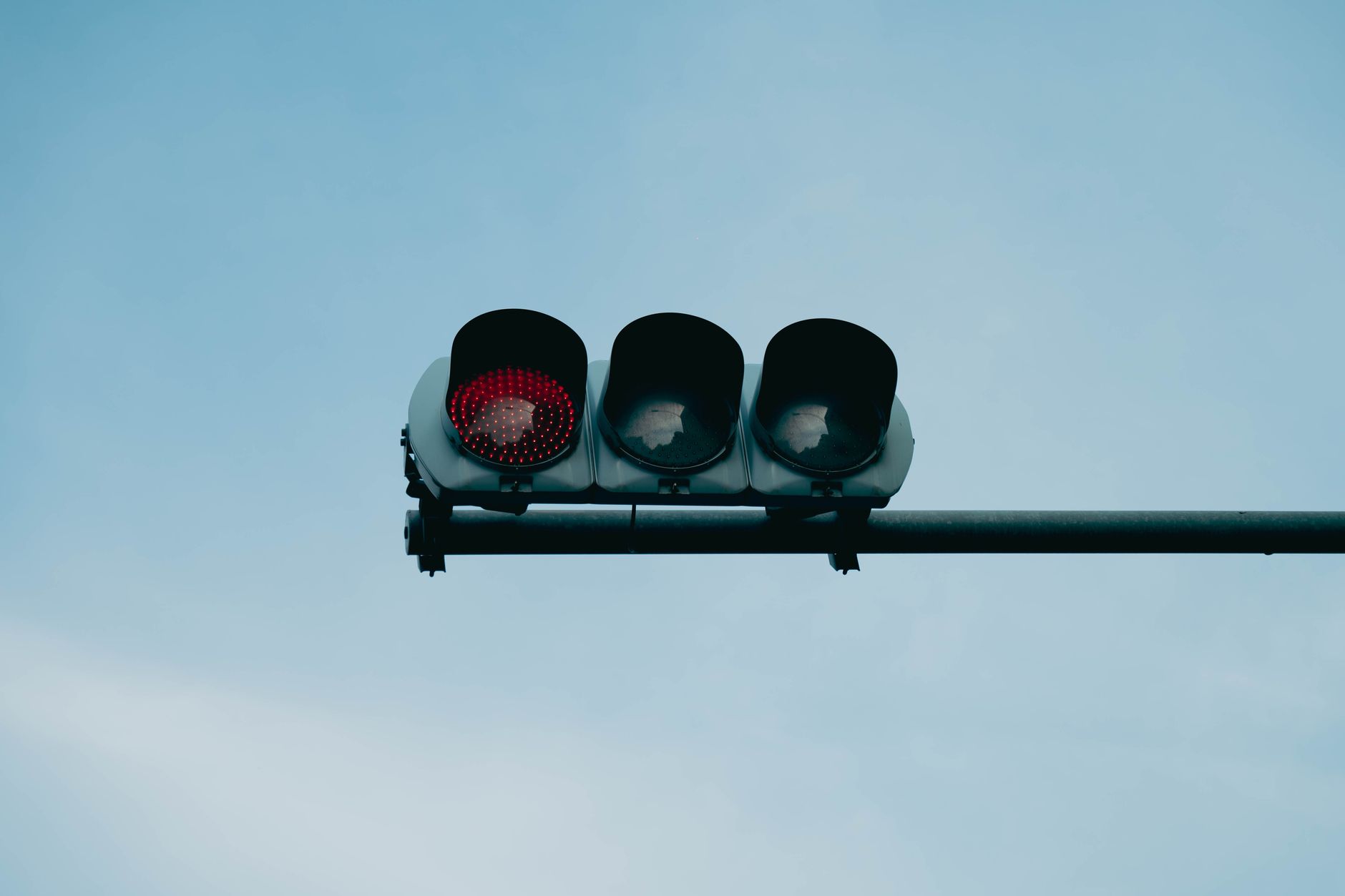
The locations that most consistently justify backing boards include high-speed rural approaches (80 km/h and above), urban arterials with dense retail signage competing for driver attention, night-freight routes, and intersections where the signal head must be read at a sharp horizontal angle from a turning lane. Gantry-mounted signals, where the head is positioned above the road against an open sky background, often don't require backing boards at all: the sky provides natural contrast. Mast arm signals positioned against a building face are the opposite case.
Ultimately, retroreflective backing boards are a low-cost intervention with a measurable safety return at the right locations. Treating them as boilerplate fittings on every job, or dismissing them entirely to cut costs, both miss the point. The specification decision deserves the same systematic justification applied to any other signal head component.