
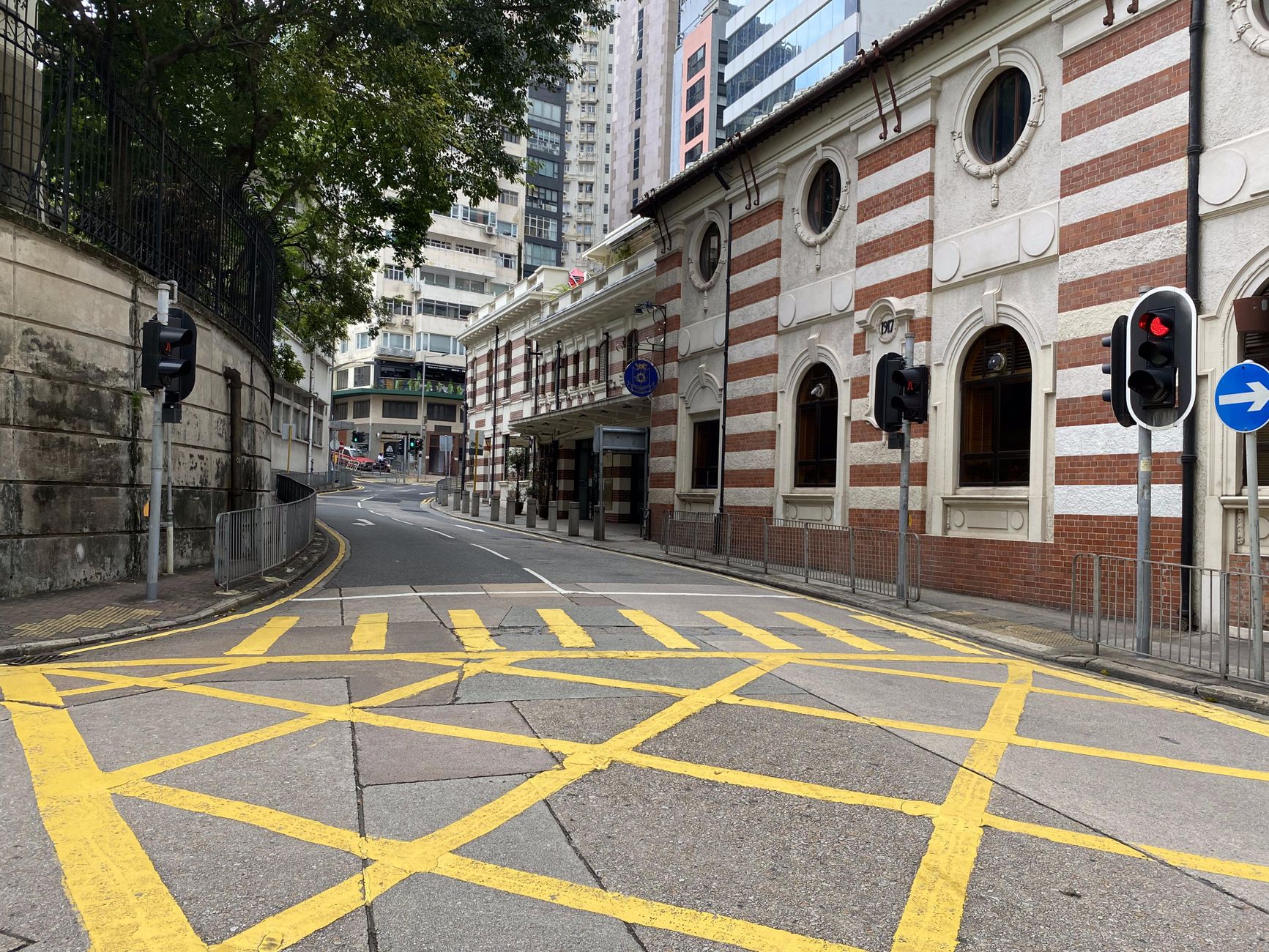
Intergreen periods are the intervals of time between the end of one signal phase and the start of a conflicting phase. Every signalised intersection in Australia depends on them to prevent vehicles that entered on a late green from colliding with vehicles responding to a new green on a crossing movement. Get the calculation wrong in either direction and the consequences are either dangerous or operationally wasteful. This is distinct from the signal phase and timing structure itself: intergreens are the seams between phases, not the phases themselves.
What an intergreen period actually covers
An intergreen has two components: the clearance time and the appearance time. Clearance time accounts for a vehicle that enters the intersection at the end of a green phase and travels across the conflict point. Appearance time accounts for a vehicle on the new phase that starts moving as soon as its green appears. Together, they define the minimum gap the system must provide before conflicting traffic is released.
The standard formula used in Australian practice draws on three inputs: the distance a vehicle must travel to clear the conflict point, the speed of that vehicle, and the assumed reaction and start-up time of vehicles on the new phase. A vehicle travelling at 60 km/h covers approximately 16.7 metres per second. A conflict point 30 metres into the intersection from the stop line requires at least 1.8 seconds of clearance travel time. Add reaction time and you're already at 3 seconds before any safety margin enters the calculation.
In practice, Austroads guidance provides worked methodologies that account for intersection geometry, approach speeds, and vehicle type. Heavy vehicles, for example, clear conflict zones more slowly than passenger cars, which pushes the required clearance time upward on freight corridors or intersections with regular truck movements.
Clearance distance and how geometry drives the number
The conflict point is the physical location where two movement paths cross. Its distance from the stop line on the terminating phase determines how far a late-clearing vehicle must travel. For a simple perpendicular intersection, this is relatively straightforward to measure. For offset intersections, slip lanes, or multi-lane movements with different conflict points per lane, each pair of conflicting movements must be assessed independently.
Engineers calculate the clearance distance as the sum of three elements: the distance from the stop line to the conflict point, the length of the vehicle, and a stopping distance allowance for the vehicle on the new phase. A standard passenger car adds roughly 4.5 metres of vehicle length. A semi-trailer adds considerably more, which is why intergreens on highways or arterial roads near freight terminals are routinely longer than the minimums derived from passenger car assumptions alone.
Conflict monitoring systems rely on accurate intergreen data to function correctly. If the declared intergreen in the controller doesn't match the actual geometric requirement, the monitor's conflict matrix becomes unreliable. Bob Panich Traffic Signals designs signal systems where conflict monitoring is configured against verified intergreen calculations, not default values carried across from a previous project.
The difference between minimum and adopted intergreens
A minimum intergreen is what the geometry demands. An adopted intergreen is what the engineer specifies in the timing plan. Adopted values are always at or above the minimum, but the gap between them isn't arbitrary padding.
Three factors commonly push the adopted value above the geometric minimum:
- Pedestrian clearance: where a pedestrian phase overlaps the end of a vehicle phase, the intergreen must accommodate pedestrians still crossing. Walking speeds for compliance purposes in Australia are typically set at 1.2 metres per second, and some jurisdictions reduce this to 0.8 metres per second for accessible design on high-pedestrian routes.
- Late-running tolerance: signal controllers are not instantaneous. Hardware latency and communication delays between the controller and the signal head introduce small but measurable offsets. Adopted intergreens absorb this without eroding safety margins.
- Network coordination constraints: in coordinated corridors, adopted intergreens sometimes carry additional seconds to align with offset plans across adjacent intersections.
Overstating intergreens is a different problem. Excessive intergreen time on a busy arterial introduces dead time into every cycle, reducing throughput and degrading level of service. A 2-second overestimate on a 90-second cycle at a busy intersection costs roughly 2.2% of available green time per phase pair. Across a coordinated network, those losses compound.
Intergreens in adaptive and coordinated signal systems
Fixed-time signal plans treat intergreens as constants because the phase sequence is fixed. Adaptive signal control systems, which adjust phase order and duration in real time based on detector inputs, must carry valid intergreen values for every possible phase transition in their conflict matrix, including transitions that may occur rarely under normal conditions.
This is a non-trivial design requirement. A four-phase intersection with eight possible movements can generate dozens of unique phase transition pairs, each with its own geometric intergreen requirement. The controller's phase compatibility table must be populated accurately before adaptive logic is enabled. Bob Panich Traffic Signals treats this verification step as a mandatory part of commissioning, not an optional check. Understanding how signal phase and timing plans are built and adjusted is essential context for anyone working through intergreen configuration on adaptive systems.
Common errors in intergreen calculations
The most frequent mistake is measuring conflict distances from drawings rather than from survey data. Construction tolerances mean that stop line positions, kerb lines, and lane widths in the field often differ from the design drawings by amounts that matter at the precision intergreen calculations require. A 1.5-metre discrepancy in conflict point distance translates to approximately 0.09 seconds of clearance error at 60 km/h. That may sound small. Across multiple conflict pairs, errors accumulate.
A second common error is applying a single speed assumption across all approach lanes. Where a left-turn slip lane operates independently of through movements, the relevant speed is the speed through the slip lane, not the posted approach speed. Mismatching the speed assumption to the actual movement inflates or deflates the clearance calculation.
A third issue appears during controller configuration. Some legacy controllers store intergreen values in a lookup table indexed by phase number, and field technicians occasionally transpose entries during programming. The geometric calculation is correct on paper but the wrong value gets loaded into the controller. Commissioning tests that verify intergreen behaviour under live switching conditions catch this. Tests that only verify phase timing under steady-state green do not.
Documentation and audit requirements
Most Australian transport authorities require that intergreen calculations be documented and retained as part of the signal design package. The calculation worksheets, the conflict point survey data, and the adopted intergreen schedule form part of the technical record that supports both commissioning sign-off and any future audit triggered by an incident or design review.
Where intergreens are revised after initial approval, the change must be re-calculated from first principles rather than adjusted by estimate. A site modification that widens a lane or repositions a stop line changes the conflict point geometry and therefore the minimum intergreen. Treating a geometric change as a purely civil matter, without updating the signal design record, is a compliance gap that audit processes in most jurisdictions will flag.
Bob Panich Traffic Signals documents intergreen calculations as a standing deliverable on all signal design engagements, cross-referenced against the controller configuration file and the as-built geometry. That linkage is what makes the technical record usable rather than archival.