
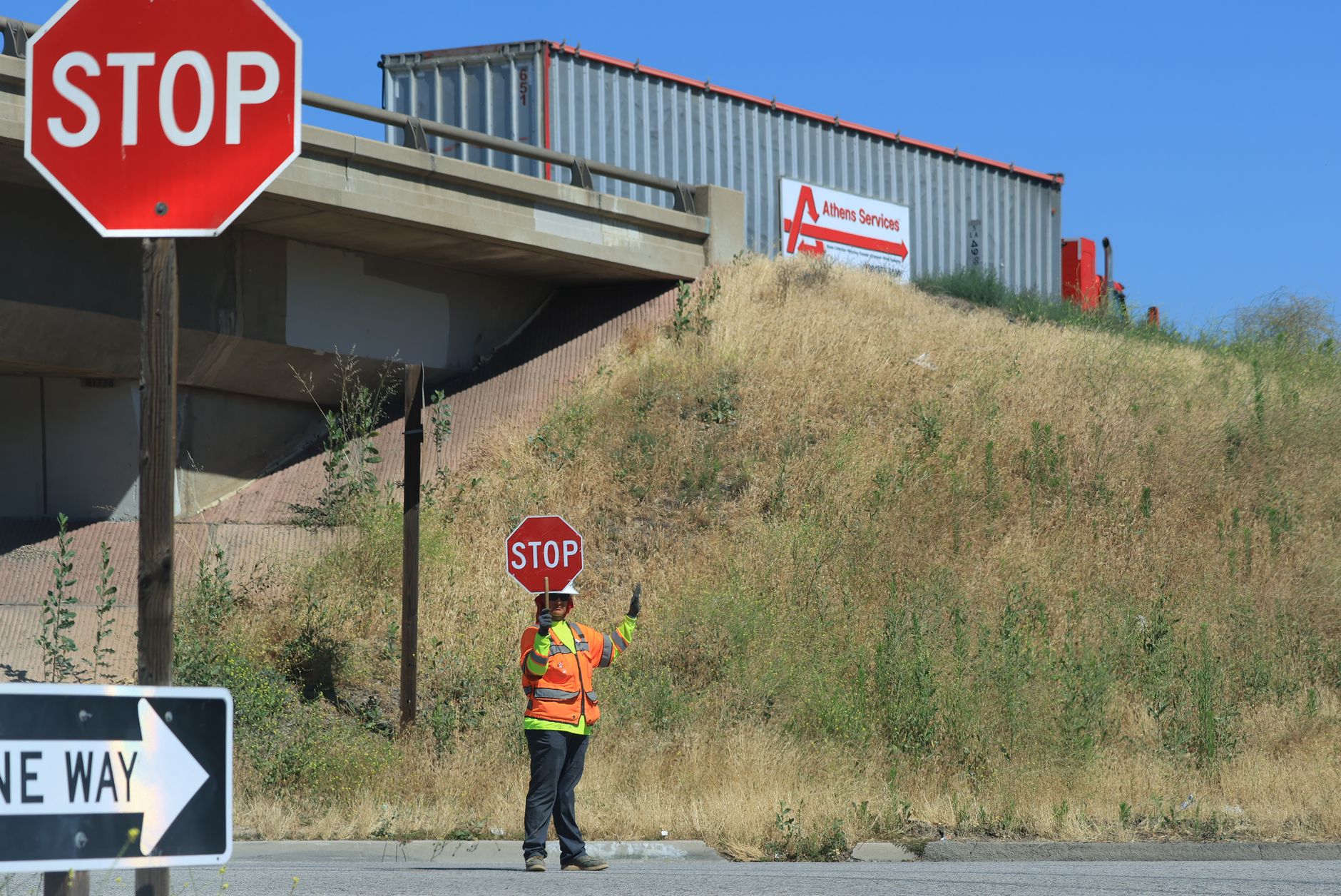
Site access planning sits in an awkward part of the project lifecycle. It's not glamorous enough to anchor a design review, and it's not technical enough to attract much attention during procurement. Yet when it goes wrong, the consequences are immediate: crews unable to reach the work zone, deliveries blocked by lane closures they weren't told about, or dig permits refused because access to buried services wasn't confirmed. On traffic signal installations, where the work zone is typically in or immediately adjacent to a live carriageway, access failures translate directly into programme slippage and safety exposure.
What site access planning actually covers
Access planning for traffic signal installations covers more ground than a single site visit. It includes physical access to each installation point, temporary traffic management (TTM) arrangements, access to underground services for pit and conduit work, staging areas for plant and materials, and coordination with other works happening in the same corridor. Each of these has its own lead times and approval processes, and they don't always align neatly with the construction programme.
Physical access is the starting point. For kerbside signal pole installations, this means confirming that a vehicle-mounted EWP (elevated work platform) or crane can reach the pole position without obstructions. Street trees, overhead power lines, and existing furniture all create access constraints that a site photograph won't always reveal. Bob Panich Traffic Signals assesses these constraints during the design phase, not on the morning of installation.
Underground access is a separate problem. Traffic signal installations require conduit runs between pits, and those pits sit in footpaths and traffic lanes that have their own occupancy constraints. Dial Before You Dig checks are mandatory, but they don't replace a physical inspection of existing pit covers, conduit integrity, and any recent resurfacing that may have buried shallow services further than drawings suggest.
Temporary traffic management: the critical path item most teams underestimate
TTM approval is frequently the longest-lead item on a traffic signal installation programme. Road occupancy licences (ROLs) in most Australian states require submission to the relevant road authority at least 10 business days before works commence, and for arterial roads or works affecting multiple lanes, that timeframe can extend to 4 to 6 weeks depending on the authority and time of year.
The design of the TTM itself matters as much as the approval. A traffic control plan that requires too many lane closures increases community impact and the likelihood of a request for modification from the road authority. One that uses too few closures may leave workers exposed. Bob Panich Traffic Signals designs TTM arrangements that are proportionate to the work being done at each installation point, using partial-lane closures and shoulder occupancy where full-lane closure isn't needed.
Timing matters too. Traffic signal installations near schools, hospitals, or freight routes carry restrictions on when closures are permitted. Peak-hour exclusion windows, school drop-off and pick-up buffers, and event-related restrictions all need to be mapped against the construction programme before it's finalised. Discovering a restriction after the programme is issued to the client is a scope management problem, not just a logistics one. For a closer look at how scope issues develop on signal projects, the article on scope creep in traffic signal projects covers the early warning signs.
Coordinating access across multi-site programmes
Most traffic signal projects don't install at a single intersection. They cover a corridor of 4 to 12 intersections, sometimes more, with interdependencies between sites because signal coordination requires connected infrastructure. This means access planning must treat the programme as a network, not a list of independent tasks.
Access conflicts between sites are common. Two installation crews working on adjacent intersections may compete for the same staging area, or their TTM arrangements may conflict if both require partial lane closures on the same road section. Resolving these conflicts on paper before crews mobilise is straightforward. Resolving them in the field costs hours and goodwill.
Utility relocation is another source of cross-site conflict. If a telecommunications pit needs relocating to clear a signal pole position, that relocation has its own access requirements, approval chain, and lead time. Bob Panich Traffic Signals includes utility coordination in the access planning process for every multi-site programme, treating each utility conflict as a programme risk rather than a site-level issue.
Night works and restricted-access installations
Some installation locations can't be accessed during daylight hours without unacceptable traffic impact. Major arterials, motorway ramp signals, and CBD intersections with heavy pedestrian flows often require night-shift installation, which introduces a separate set of access considerations.
Night access requires confirmed lighting arrangements for the work zone, coordination with local noise ordinances (particularly in residential-adjacent areas), and confirmation that security and emergency access to the site isn't compromised by overnight TTM. Fatigue management requirements under the relevant work health and safety regulations also apply, which affects crew scheduling and the number of concurrent tasks that can be run safely on a single night shift.
Material deliveries to night-shift sites need separate planning. A signal controller cabinet weighing 80 to 120 kilograms can't be walked from a distant staging area; the delivery vehicle needs access within a manageable distance of the pit. This constraint often determines the TTM layout as much as traffic volume does.
Documentation and handover implications
Access planning produces documentation that feeds into later project phases. As-accessed records, service identification results, TTM as-builts, and any site-specific deviations from the construction drawings all need to be captured during the access phase and retained for the project record. These records matter more than they seem at the time: when a maintenance crew needs to access the same pit three years later, the site-specific access notes from the original installation are the fastest way to establish what constraints apply.
Bob Panich Traffic Signals links access documentation directly to the handover package, ensuring that asset managers and maintenance teams receive not just the as-built drawings but a record of how each site was accessed and any constraints that remain in place. This aligns with the broader approach to handover documentation for traffic signal projects, where operational continuity depends on information captured during installation.
Access constraints that affect maintenance frequency or method should also feed into the commissioning phase. A signal head installed over a live traffic lane with complex TTM requirements for every maintenance visit is a higher lifecycle cost than one accessible from a footpath. Where the design allows flexibility, access considerations during the project inform choices that reduce operational burden over the asset's service life. The commissioning guide for traffic signal systems covers how these operational factors are verified before handover.
Building access planning into the programme from the start
The most common mistake in site access planning is treating it as a pre-construction checklist rather than a programme activity. Access tasks have durations, dependencies, and approval lead times. They belong in the project programme with assigned owners and milestone dates, not on a shared drive waiting for someone to notice they haven't been done.
For traffic signal installations, Bob Panich Traffic Signals builds access planning milestones into every project programme from the first draft. ROL submissions, utility notifications, TTM design approvals, and site inspection records each carry a target date tied to the construction start date. If an access milestone slips, it shows immediately in the programme and triggers a conversation before it becomes a delay. That's the difference between access planning as a discipline and access planning as an afterthought.