
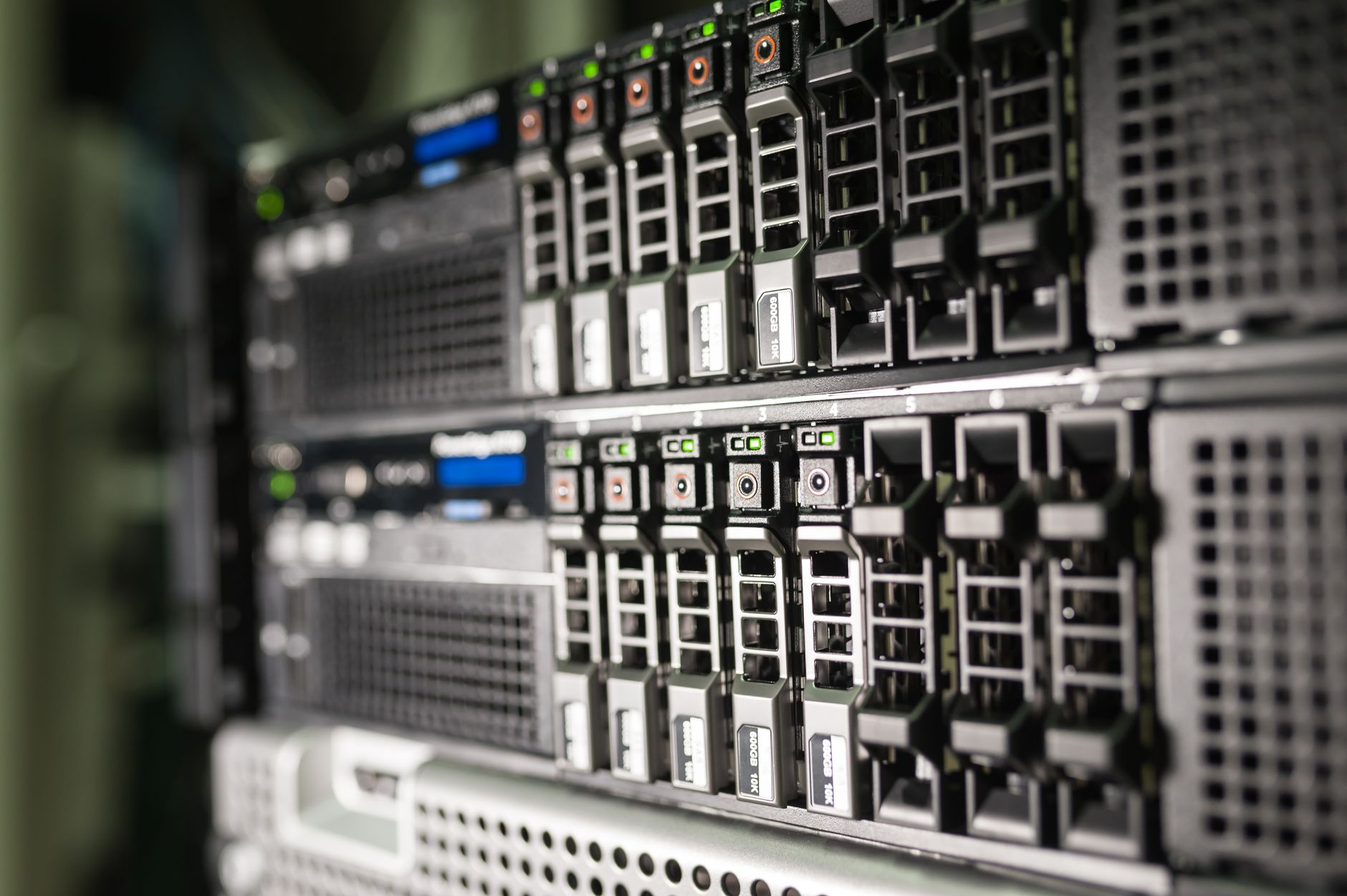
RAID configurations are one of the most commonly misunderstood elements of industrial data storage in traffic and smart city systems. The acronym stands for Redundant Array of Independent Disks, and the concept is straightforward: distribute data across multiple storage devices so that a single drive failure does not bring down the system. In practice, though, selecting the right RAID level for a traffic signal cabinet or transport operations centre requires careful consideration of read/write performance, rebuild times, available drive bays, and the operational consequences of any storage interruption.
Why RAID matters in traffic infrastructure
Traffic signal controllers and roadside processing units operate continuously, often in harsh environments with vibration, temperature swings, and power fluctuations. Storage failure is not a theoretical risk. Drives do fail, and when they do, the question is whether the system keeps running or stops logging. For a controller managing a busy intersection, even a brief gap in data capture can affect incident reconstruction, adaptive signal timing records, or compliance reporting under state transport authority requirements.
Beyond individual controllers, the operations centres that aggregate data from hundreds of signals face even higher storage stakes. CCTV feeds, detector logs, event timestamps, and signal state histories all feed into databases that must remain accessible around the clock. The redundancy principles that underpin reliable traffic data storage make RAID a natural starting point, but it is only one layer of a broader availability strategy.
Common RAID levels and where they fit
RAID 1: mirroring
RAID 1 writes identical data to two drives simultaneously. If one fails, the other continues without interruption. This is the simplest and most reliable configuration for environments with only two drive bays, which is common in compact roadside cabinets. The trade-off is capacity: you only get half the total drive capacity as usable storage. For controllers where the data volume is manageable, this is often the right choice. Rebuild times are short, and the hardware requirements are minimal.
RAID 5: striping with distributed parity
RAID 5 distributes data and parity information across three or more drives. A single drive can fail and the array continues operating, with the parity data used to reconstruct the lost information during a rebuild. The capacity overhead is one drive's worth regardless of how many drives are in the array, making it more efficient than RAID 1 at scale. RAID 5 is well suited to server-grade storage in transport operations centres where bay count is not constrained. Its weakness is rebuild performance: on large drives, a rebuild can take many hours, during which a second failure would cause total data loss.
RAID 6: dual parity
RAID 6 adds a second parity block, allowing the array to survive two simultaneous drive failures. This makes it preferable in environments where drives are large and rebuild windows are long, or where any further failure during a rebuild would be catastrophic. The additional overhead means a minimum of four drives and slightly lower write performance compared to RAID 5. For a transport data centre holding long-term signal logs, detector histories, and video footage, RAID 6 provides a meaningful safety margin over RAID 5.
RAID 10: striping and mirroring
RAID 10 combines mirroring and striping across a minimum of four drives. It delivers fast read and write performance with strong fault tolerance, and rebuilds are faster than parity-based RAID levels because the recovery process simply copies from the mirror rather than recalculating parity. The cost is capacity: only half of the total drive capacity is usable. For high-throughput applications such as real-time video surveillance storage or dense sensor logging from smart intersections, RAID 10 is often the practical choice when performance is as important as redundancy.
Matching RAID levels to deployment context
Selecting a RAID configuration is not a generic exercise. The operating environment, data criticality, available hardware, and maintenance capacity all shape the decision. A few principles hold across most traffic and transport deployments.
- Roadside cabinets with limited physical space and moderate data volumes are well served by RAID 1. The simplicity reduces failure modes, and hot-spare drives are easy to manage.
- Regional traffic management centres aggregating data from many sites benefit from RAID 5 or RAID 6 depending on drive size and the acceptable rebuild window. Larger drives push the case toward RAID 6.
- High-throughput or video-heavy systems benefit from RAID 10 where budget allows, prioritising write speed and fast recovery over capacity efficiency.
- Edge compute nodes in IoT traffic deployments may use RAID 1 or industrial-grade flash storage with built-in wear levelling rather than traditional RAID, particularly where vibration tolerance is the primary concern.
It is also worth noting that flash-based storage changes some of the traditional RAID calculus. Solid-state drives have different failure characteristics to spinning disks, and RAID controllers designed for HDDs do not always handle SSD wear optimally. Reviewing the differences between flash storage and HDDs in traffic system contexts is a useful step before finalising any RAID architecture.
RAID is not a backup
One of the most persistent misconceptions in storage planning is treating RAID as a substitute for backup. RAID protects against drive failure. It does not protect against accidental deletion, software corruption, ransomware, or a faulty RAID controller that corrupts an entire array. In industrial traffic systems, where data may be required for regulatory reporting, incident investigation, or legal purposes, RAID should be paired with a separate backup regime that writes to an isolated medium or location on a defined schedule.
Transport authorities and councils specifying storage solutions should require vendors to demonstrate both the RAID configuration and the backup architecture. A system with RAID 6 and no off-array backup is not as resilient as it appears on paper. Equally, a robust backup schedule cannot compensate for the operational disruption caused by running a degraded RAID array for hours or days while a failed drive is sourced and replaced.
Monitoring and maintenance considerations
RAID arrays require active monitoring to deliver on their promise. A failed drive that goes undetected means the system is operating in a degraded state with no fault tolerance until the failure is identified and the drive replaced. Industrial traffic deployments should include automated alerting that notifies operations staff of any drive fault, array degradation, or rebuild event. Many RAID controllers support SMTP-based alerts or SNMP traps that integrate with existing network management systems.
Maintenance schedules should account for drive age and manufacturer mean time between failure (MTBF) ratings. Drives in high-vibration environments may reach end of life earlier than laboratory ratings suggest, particularly older HDD technology. Planning proactive drive replacement before MTBF thresholds are reached is a low-cost way to reduce the probability of a degraded array or unplanned failure.
Getting RAID right in industrial traffic systems is ultimately about matching configuration to context. The level of redundancy, the rebuild characteristics, and the integration with broader backup and monitoring infrastructure all need to align with the operational requirements of the specific deployment. For teams specifying storage at either the roadside or the operations centre level, treating RAID selection as an engineering decision rather than a checkbox will yield more reliable outcomes over the life of the asset.